Blocked drains · Ringwood VIC 3134
Blocked Drains in Ringwood
Gurgling toilets, slow showers or water rising in the gully outside? We clear blocked drains across Ringwood, find out what caused them on camera and tell you how to stop it happening again. Ring 03 9088 4157.
Signs your drain is blocking
Drains rarely block without warning. The early signs are easy to miss:
- Water draining slowly from a shower, bath, basin or sink
- Gurgling from the toilet or plughole when another fixture drains
- Unpleasant smells from floor wastes or the gully outside
- Water rising in the shower when the toilet is flushed
- The outdoor gully overflowing, especially after the washing machine empties
- Wet, soggy patches in the garden above the sewer line
If only one fixture is slow, the problem is probably close to it. If several are affected, the blockage is further along in the main sewer.
Why Ringwood drains block
Tree roots in old earthenware
Much of Ringwood was built in the decades after the war, when sewers were laid in short lengths of glazed earthenware. The joints between those lengths were sealed with mortar or early rubber rings, and after sixty or seventy years many have cracked or shifted. Ringwood is a leafy suburb, with established gums, liquidambars, elms and fruit trees in many gardens and nature strips. Their fine roots find the moisture leaking from a cracked joint, grow into the pipe and form a mat that catches everything passing through.
Root blockages tend to come back. Clearing the roots restores flow, but unless the damaged joint is sealed, they grow back, often within a year or two.
Shared sewers on unit sites
When a Ringwood block was subdivided for units or townhouses, the dwellings often share a sewer that runs down the common driveway to a single connection point. A blockage in the shared section affects every dwelling upstream. These lines can be long and fairly flat, and they carry the waste of several households, so fat, wipes and grease build up faster.
Fat, wipes and food scraps
Cooking fat poured down the sink cools and sticks to the inside of the pipe. Wipes, even those sold as flushable, hold together and catch on joints and roots. Food scraps add to the mix. Together they form blockages that build gradually and then stop the drain overnight.
Collapsed or sagging pipes
Ringwood's clay soil swells in wet winters and shrinks in dry summers. Over decades, this movement can crack pipes, pull joints apart or create dips where water and waste settle. A sagging pipe is prone to repeated blockages.
Stormwater drains
Stormwater lines block with leaves, silt and roots, causing pits to overflow and water to pool against the house. Ringwood's tall trees drop a lot of leaves, especially in autumn.
How we clear blocked drains
Finding the blockage
We start by working out which part of the system is blocked: a single fixture, a branch line, the main sewer, or the shared line on a unit site. We locate the inspection openings and the overflow relief gully, check which fixtures are affected, and decide where to access the drain.
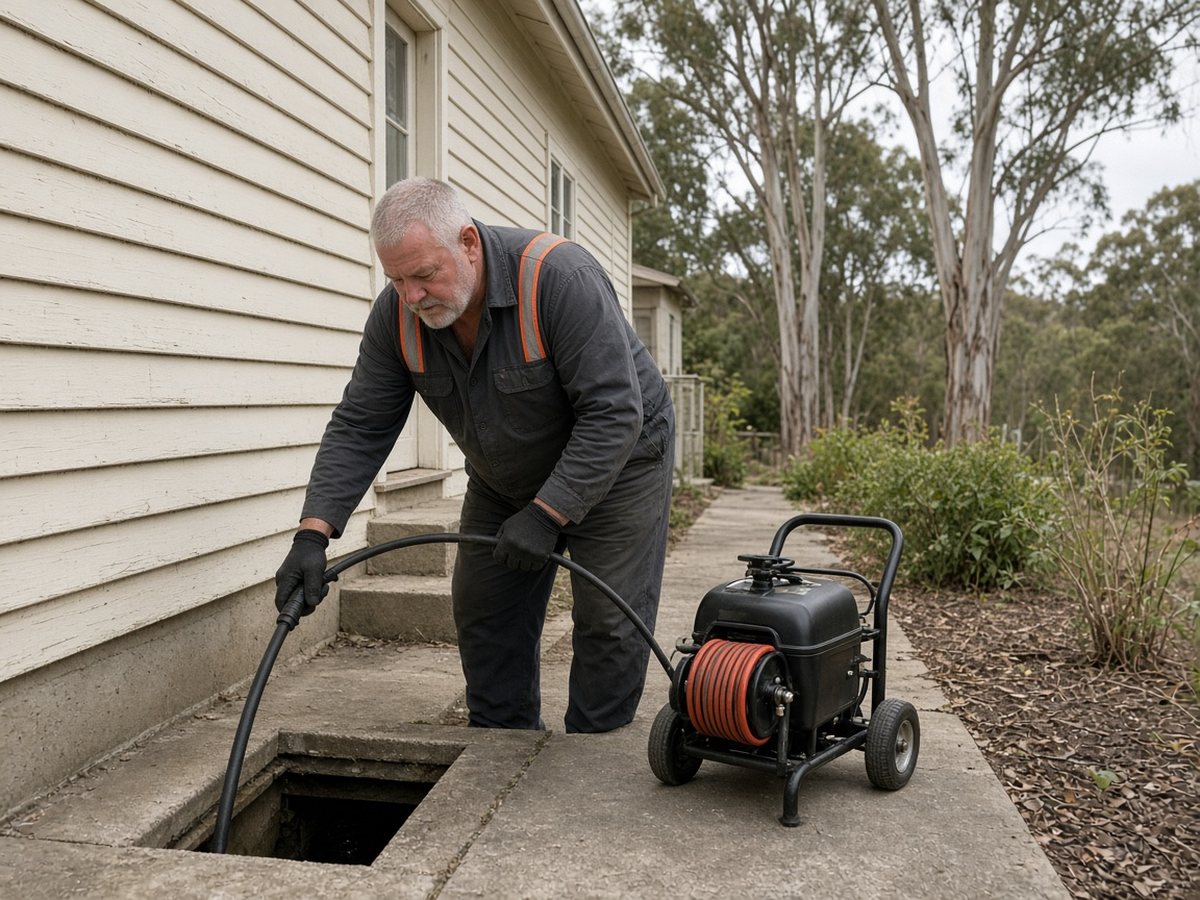
Drain machine
For root blockages and stubborn obstructions, we use an electric drain machine with a rotating cable and cutting heads. It cuts through roots and breaks up solid blockages.
High-pressure jetting
For fat, silt and general build-up, high-pressure jetting is often the better tool. A water jet scours the full circumference of the pipe, washing debris down the line and leaving the pipe clean rather than with just a hole punched through the blockage.
Camera inspection
Once the drain is flowing, we run a camera through it. You can watch the screen with us and see what caused the blockage: roots at a joint, a crack, a sag, fat build-up, or a foreign object. We record the footage and use a locator to mark the position and depth of any problem from above ground.
Long-term fixes
If the camera shows a damaged pipe, clearing alone will not fix it. Options include:
- Regular maintenance clearing for minor root intrusion, particularly if you plan to replace the pipe later.
- Pipe relining, where a resin-soaked liner is installed inside the old pipe and cured in place, sealing cracks and joints without digging.
- Patch repairs that seal a single damaged joint from the inside.
- Excavation and replacement where a pipe has collapsed or lost its shape and relining is not possible.
We explain the options, what each involves and what it costs, and you decide.
Blocked drains on unit and apartment sites
On a unit site, we trace the drain to find where the blockage is. If it is in your private branch, it is generally your responsibility. If it is in the shared section, it may be common property and the owners corporation's responsibility. We give you a written note explaining what we found, with photos or camera footage, so the cost can be allocated fairly.
In apartment buildings, blockages in stacks and shared drains can affect many dwellings. We work with building managers to clear the line, identify the cause, and recommend maintenance to reduce the risk of repeats.
Who owns the drain
In general, the sewer pipes within your property are your responsibility up to the connection point with Yarra Valley Water's sewer. If the blockage is in the authority's main, we will tell you so you can report it to them. We can usually tell from the camera footage and the location of the connection where the problem sits.
Preventing blockages
- Wipe greasy pans with paper towel before washing them and put the towel in the bin.
- Use strainers in sinks and showers.
- Only flush toilet paper.
- Keep tree roots in mind when planting near the sewer line.
- Have older earthenware sewers inspected by camera, especially if you have had a blockage before.
- On unit sites, agree with neighbours on what goes down the shared drain.
What the camera usually shows in Ringwood
After clearing hundreds of drains in this part of Melbourne's east, certain patterns come up again and again on the screen:
- Fine root curtains at earthenware joints. These look like hair hanging from the top of the pipe. They catch paper and waste, and they regrow after cutting.
- Offset joints. One section of pipe has dropped or moved relative to the next, leaving a lip that snags debris.
- Cracks along the crown. Often caused by soil movement or tree roots pressing on the pipe from outside.
- Belly or sag sections. Water sits in the low point, leaving a line of sludge.
- Junctions from later additions. Many Ringwood homes have had extensions, extra bathrooms or granny flats added. The junctions where new PVC meets old earthenware are a frequent weak spot.
- Fat bands in kitchen lines. Thick, waxy build-up on the walls of the pipe near the kitchen.
Knowing which of these you have tells us whether a simple clear is enough or whether repair is worth considering.
Clearing step by step
So you know what to expect when we turn up:
- We ask about the symptoms: which fixtures are slow, when it started, whether it has happened before.
- We find the overflow relief gully and any inspection openings, and check whether water is sitting in them.
- We choose the right tool: drain machine for roots and hard blockages, jetter for fat, silt and soft build-up.
- We clear the line and run water to confirm it is flowing freely.
- We put the camera through, record the footage and show you what we found.
- We locate any problem spots from above ground and mark them if needed.
- We explain the options and leave the area clean.
Drains under extensions and driveways
Plenty of Ringwood houses have been extended over the years, and sometimes the original sewer now runs under a new room, deck or driveway. That makes digging expensive and disruptive. Camera inspection and relining are particularly useful here, because they let us assess and repair the pipe without lifting slabs or pavers. If an inspection opening has been built over or buried, we can often find the line with a locator and access it from another point.
Inspection openings and why they matter
An inspection opening is a capped access point on the sewer line, usually near the house or the boundary. It lets us clear the drain without removing toilets or cutting into pipes. Over time, openings get buried under garden beds, paving or decking. If you know where yours is, keep it clear and accessible. If you are not sure, we can help locate it, and if there is none, we can install one so future clearing is simpler and cheaper.
The overflow relief gully
Every house connected to the sewer should have an overflow relief gully outside, usually near the kitchen or laundry. It is set lower than the floor wastes inside, so if the sewer blocks, sewage spills out there rather than through the shower. If the grate has been covered by paving or garden, or raised above floor level by landscaping, it cannot do its job. We check the gully on every blocked drain visit and tell you if it needs attention.
Blocked drains before you sell or buy
If you are buying an older Ringwood home, a pre-purchase drain camera inspection can reveal root intrusion, cracks or collapsed sections that would be costly to fix. If you are selling, knowing the condition of your drains helps you answer questions and avoid surprises. We provide recorded footage and a written summary.
Commercial and strata drains
Shops, cafes and offices around Ringwood's activity centre have their own drain issues, from grease in kitchen lines to shared drains in strip shops. Strata buildings need regular maintenance to keep shared lines flowing. We can set up a maintenance schedule that clears and inspects shared drains before problems reach residents.
Why plungers and caustic products often fail
A plunger can shift a soft blockage in a basin or toilet trap, but it does nothing for roots or fat further down the line. Caustic and acid drain products can eat into old pipes and seals, release fumes and splash, and they rarely touch root mats. They also make the job more dangerous for whoever clears the drain afterwards. If a drain is slow across several fixtures, mechanical clearing is the safe and effective option.
After heavy rain
Some Ringwood sewers only play up after storms. That usually means stormwater is getting into the sewer through a broken pipe, a missing cap or an illegal downpipe connection, overloading the line. A camera inspection and a look at the gully and downpipe connections usually finds the entry point. Fixing it protects your drains and keeps sewage out of the stormwater network.
Signs a drain is close to failing completely
Some warnings mean a full blockage is only days away: toilet water rising high in the pan before slowly draining, the gully outside holding water after the washing machine runs, sewage smells in the yard, or a gurgle from the shower every time the toilet is flushed. If you notice any of these, book a clear before it becomes an overnight overflow. Clearing a partly blocked drain at a time that suits you is far less stressful than dealing with sewage on the bathroom floor.
Shared driveways and inspection access
On unit sites, inspection openings on the shared line are often under the common driveway or in a neighbour's garden. We work with owners to get access respectfully, and if there is no usable access point on a long shared run, we can install one so that future clears are faster and less disruptive for everyone.
Commercial kitchens and grease
Cafes, takeaways and restaurants along Maroondah Highway and around Eastland put large volumes of fat and food waste into their drains. Even with a grease arrestor, kitchen lines build up over time. Scheduled jetting, done outside trading hours, keeps lines flowing and avoids the disruption of a blockage during a busy service. We can work around your opening times and provide records for your landlord or council inspections.
How often should an old sewer be checked?
If your home has an earthenware sewer and large trees nearby, and you have had a root blockage before, a camera check every couple of years is sensible. It shows whether roots are returning and lets you plan relining or maintenance clearing before the next overflow.
Ring us
For blocked drains in Ringwood, ring 03 9088 4157. We will clear it, show you what caused it and explain how to keep it clear.
The standard
Every blocked drains and sewers job includes
| Finding the fault | Camera, locator, thermal imager or gauge as the job needs, with what we find shown to you |
|---|---|
| Agreeing the cost | Discussed on site before work begins, and written down for bigger jobs |
| The plumber | Licensed in Victoria for the class of work involved, and insured |
| Materials | WaterMark certified fittings and fixtures installed to the Australian Standards |
| Paperwork | Compliance certificate for regulated work, plus photos or footage when useful |
| Leaving | Everything tested with you, work area cleaned, old parts taken away |
Asked and answered
Blocked Drains and Sewers in Ringwood: your questions
How long does it take to clear a drain?
Many blockages are cleared within an hour or two. Root-choked or collapsed pipes can take longer.
Why does my drain keep blocking?
Usually roots at a cracked joint, a sag in the pipe or regular fat and wipe build-up. A camera inspection shows which.
Who pays for a blocked shared drain on a unit site?
It depends on where the blockage is. We trace it and give you a written note to help sort out responsibility.
Can you clear a drain without digging?
Yes. Most blockages are cleared through existing access points, and relining can repair damaged pipe without excavation.
Is jetting better than a drain machine?
Each suits different blockages. Jetting is best for fat and silt, while a drain machine cuts through roots.
How do I know if the main sewer is blocked?
If several fixtures are slow or the outside gully overflows, the main line is likely blocked.
Do you clear stormwater drains?
Yes. We clear blocked stormwater pits and lines and can check them on camera.
What if the blockage is in the authority's sewer?
We will tell you so you can report it to Yarra Valley Water.
Can tree roots really break a pipe?
Roots usually enter through existing gaps at joints, then expand as they grow. Over time that pressure can crack an old earthenware pipe or push joints further apart.
Do you clear drains for businesses?
Yes. We clear kitchen, toilet and stormwater drains for shops, cafes and offices, and can work outside trading hours.
Reading room
Before you call, read this
Quotes and bookings
Tell us about the job
Give us the basics and a licensed Ringwood plumber will phone you back. Water pouring somewhere it should not? Do not wait for a reply, ring 03 9088 4157.
There is no price list here on purpose. Every job is looked at first, and the cost is agreed with you before work starts.
The process
Four steps, no guesswork
- 1You ring or write
Tell us what is happening and what sort of property it is. A phone photo of the problem or the hot water label helps us load the right parts.
- 2We look and explain
On site we find the cause, show you what we see and settle the price with you. Nothing starts until you agree.
- 3The repair, tested
Work is carried out to the plumbing code and the relevant Australian Standards, then run and checked with you watching.
- 4Tidy finish, written up
Old parts leave with us, the area is cleaned and you get a written summary, with a certificate where the law requires one.
Elsewhere on this site
More Ringwood plumbing services
Service area
Ringwood first, then the Maroondah suburbs around it
Most of our days start near Ringwood Lake and Eastland. From there it is a short hop north up Warrandyte Road to Ringwood North, Warranwood and Donvale, east along Maroondah Highway to Ringwood East, Croydon and Croydon Hills, south to Bayswater North, and west across the Whitehorse line into Mitcham. Not on the list? Ring 03 9088 4157 and we will tell you straight whether we can help.